
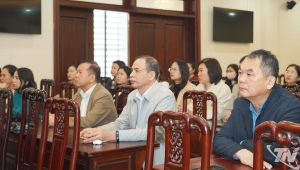
On the morning of February 4, the 14th-term Thai Nguyen Provincial People’s Council held its 11th session to review and pass several important matters related to the management and organization of tasks for socio-economic development in 2026 and the following years.
 |
| The 11th session of the 14th-term Thai Nguyen Provincial People’s Council. |
Attending the session were Mr. Trinh Xuan Truong, Secretary of the Provincial Party Committee; Mr. Vuong Quoc Tuan, Chairman of the Provincial People’s Committee; members of the Standing Committee of the Provincial Party Committee; members of the Provincial Party Standing Committee; the Standing Board of the People’s Council; leaders of the Provincial People’s Committee; the provincial National Assembly Deputies’ Delegation; the Provincial Fatherland Front Committee; and representatives of departments, agencies, and units.
At the session, delegates listened to explanations from representatives of specialized agencies of the Provincial People’s Committee on submissions regarding adjustments to the Thai Nguyen Provincial Master Plan for the 2021-2030 period, with a vision to 2050; adjustments to several socio-economic development targets and tasks for 2026; policies to attract and support the development of medical human resources for the 2026-2030 period; investment policies and priority for the development of preschool education; regulations on remuneration for members of commune-level voluntary social work teams; and some issues related to public investment, use of resources, and mechanisms and policies for socio-economic development.
With a high sense of responsibility, the Provincial People’s Council passed 10 resolutions of practical significance for the province’s socio-economic development in 2026 and the following period.
The resolutions closely follow the Party’s guidelines and policies, the State’s laws and policies, and the directives of the Government and the Prime Minister, meeting practical requirements as well as the legitimate aspirations and expectations of voters and people in the province.


Thông tin bạn đọc
Đóng Lưu thông tin