
On the morning of December 25, the Central Steering Committee for the Development of Science, Technology, Innovation, and Digital Transformation held a conference to review its work in 2025 and outline key tasks for 2026. General Secretary To Lam, Head of the Central Steering Committee, chaired the conference from Hanoi. The event was held both in-person and online, connecting 2,127 sites nationwide.
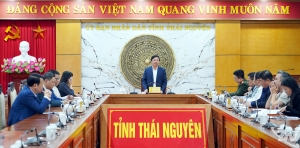
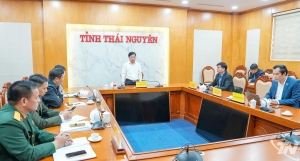
At the Thai Nguyen Provincial Party Committee site, the conference was chaired by Mr. Trinh Xuan Truong, Secretary of the Provincial Party Committee and Head of the provincial Steering Committee for the Development of Science, Technology, Innovation, and Digital Transformation.
 |
| Mr. Trinh Xuan Truong, Secretary of the Provincial Party Committee, chairs the conference at the Thai Nguyen site. |
Reports presented at the conference indicated that after a period of implementing Resolution 57, digital transformation, along with the development of science, technology, and innovation, has achieved many important results, creating momentum across multiple sectors. However, delegates also pointed out existing difficulties and limitations, proposed solutions to address them, and clearly identified key tasks for 2026.
In his concluding remarks, General Secretary To Lam emphasized that the achievements recorded in 2025 represent only an initial step, laying the groundwork for acceleration in the next phase. He called on ministries, sectors, and localities to consistently implement the guiding principle of “breakthrough action, spreading results,” linking science, technology, innovation, and digital transformation with socio-economic development, enhancing governance capacity, and improving public services.
General Secretary To Lam also urged the Government to continue providing strong leadership to promote comprehensive digital transformation across all areas, including digital government, the digital economy, and digital society. Priority should be given to digital transformation in the business sector, particularly in key economic and industrial fields such as energy, smart agriculture, and e-commerce.



Thông tin bạn đọc
Đóng Lưu thông tin